Top 3 Neck Exercises With the Highest Muscle Activation.
Building a stronger neck is about more than appearance. The right exercises can improve stability, posture, and resilience during sport or daily life, especially when they are performed with strict form and controlled resistance.
Why Muscle Activation Matters
Muscle activation matters because it tells you how hard a muscle is working during an exercise. In neck training, higher activation usually means greater training stimulus, but it also means you need better control and safer progression.research.
#1 Rotated Isometric Neck Press
The rotated isometric neck press is the top option when the goal is maximum activation. A recent comparison found that a rotated MVIC produced the highest neck-muscle activation, beating conventional and lateral-flexion positions.
How to do it
- Set your head and neck in a controlled rotated position.
- Apply resistance by pressing into a fixed object, partner, or harness.
- Keep the movement isometric and avoid jerking or twisting.
- Hold the contraction for a short, hard effort while maintaining neutral torso posture.
Form cues
- Keep the chin slightly tucked.
- Brace the torso so the neck does the work.
- Stop if you feel sharp pain, dizziness, or nerve symptoms.
Why it ranks first
This variation created the highest measured activation in the comparison study, making it the best match for lifters or athletes who want the strongest neck-training stimulus.
#2 Conventional Isometric Neck Flexion or Extension
A standard isometric neck flexion or extension hold is the most practical high-activation option for many people. EMG research shows that neck muscles respond strongly and predictably during isometric head-stabilization tasks, especially in the anterior neck and posterior neck regions.
How to do it
- Place your hand, band, towel, or harness against the forehead for flexion, or the back of the head for extension.
- Push gently to moderately into the resistance without moving the head.
- Hold the contraction for 5 to 10 seconds.
- Rest and repeat for several sets.
Form cues
- Do not arch the lower back.
- Keep the eyes level and the ribs stacked.
- Use slow, steady force rather than a maximal explosive push.
Why it ranks second
This pattern is highly effective and easier to load consistently than more complex neck positions, while still producing strong activation across the anterior and posterior neck.pubmed.
#3 Resisted Cervical Lateral Flexion
Lateral flexion trains the side neck muscles that help stabilize the head and resist side-to-side forces. It is a common neck-strengthening drill and is especially useful for balanced development and sport-specific robustness.
How to do it
- Stand or lie on your side.
- Apply resistance with your hand, band, or harness.
- Slowly tilt the ear toward the shoulder against resistance.
- Return under control and repeat on both sides.
Form cues
- Keep the shoulders still.
- Move only through a comfortable pain-free range.
- Use slow eccentric control on the way back.
Why it ranks third
It is highly valuable for neck balance and lateral stability, but the highest recorded activation in the available head-to-head comparison belonged to the rotated isometric position.
Visual sample

A useful visual for this article is a side-view image of a person performing a controlled neck side-flexion drill with a hand or band providing resistance, because it clearly shows the posture, head position, and bracing needed for safe form.
Top 3 Weighted Neck Exercises for Maximum Muscle Activation
Weighted neck training is one of the most effective ways to build thickness, strength, and stability in the cervical muscles. When done with proper form, these exercises can create a strong overload stimulus while still allowing controlled progression.iron-neck+1
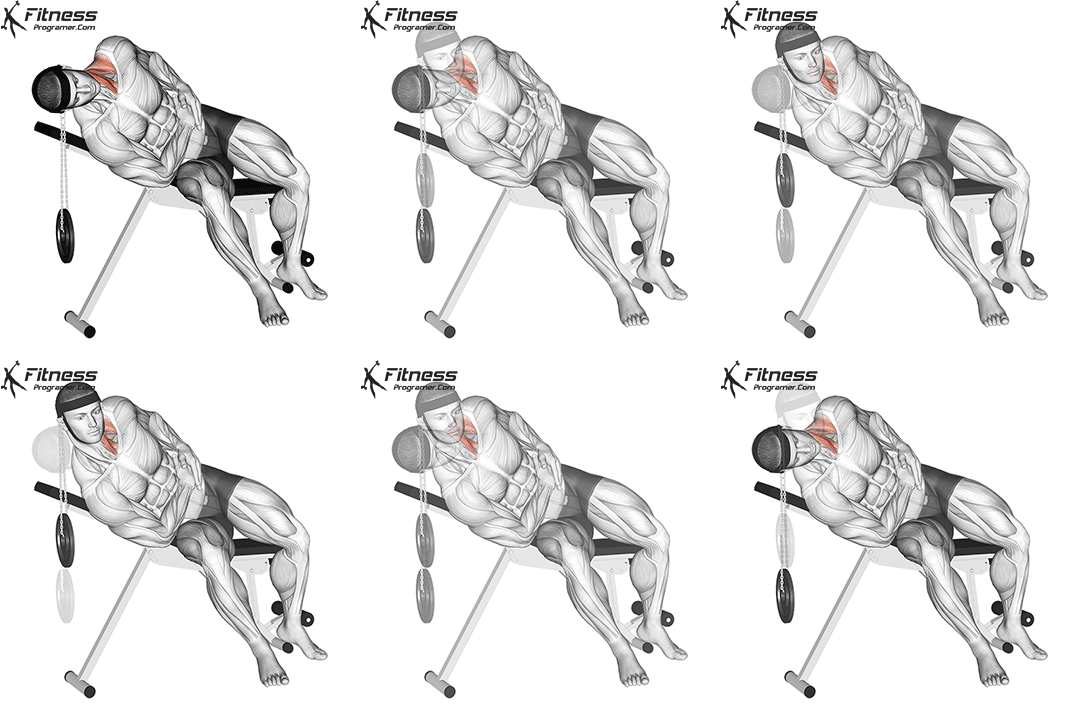
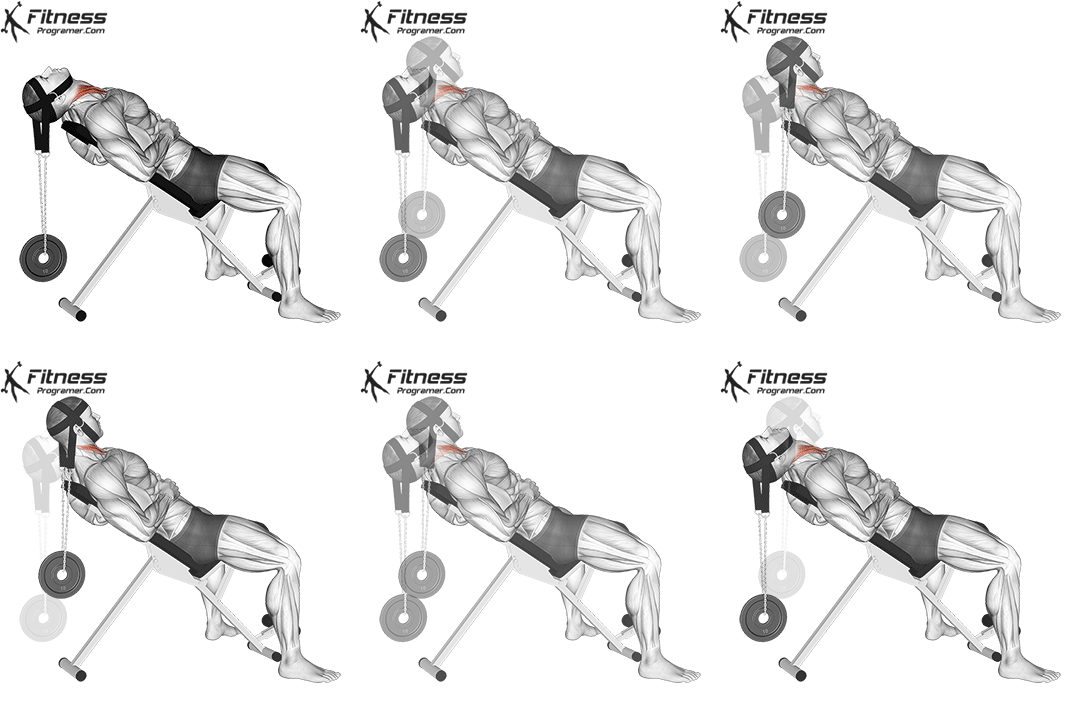
1. Weighted Neck Flexion

Weighted neck flexion is usually the top pick for direct anterior-neck loading. It uses a neck harness or similar setup to resist the motion of bringing the chin toward the chest, which makes it highly specific for the front of the neck.iron-neck
How to do it:
- Attach a neck harness to a light weight.
- Lie on a bench with your upper back supported.
- Lower the head slowly, then flex the neck back up under control.
- Keep the motion smooth and avoid bouncing.iron-neck
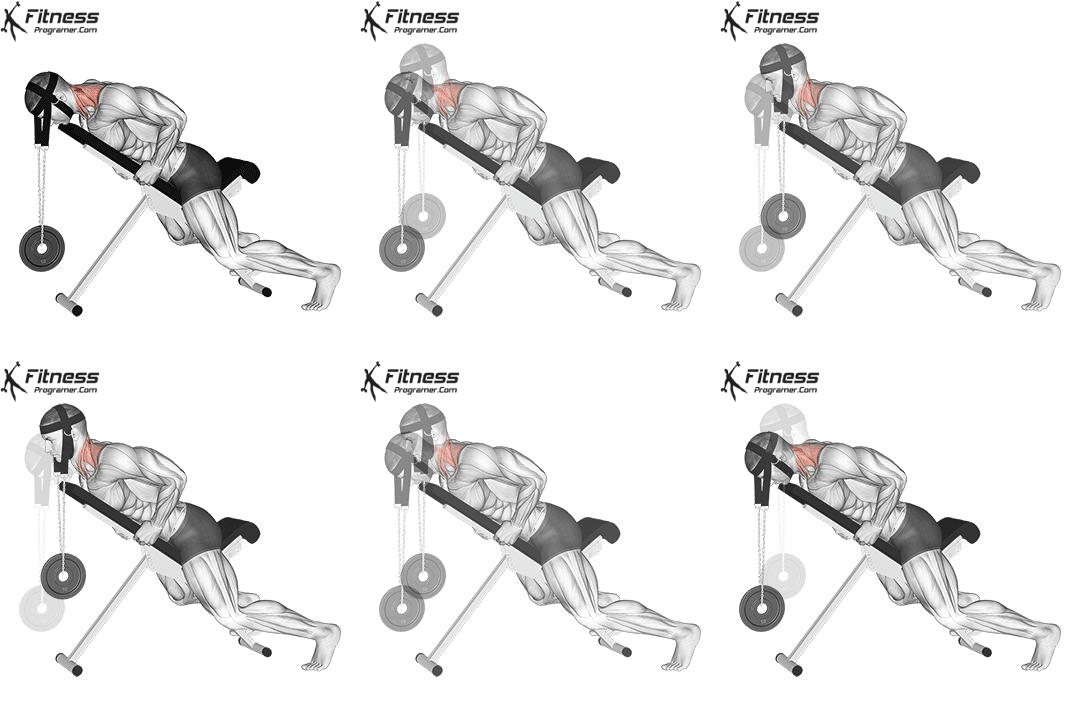
2. Weighted Neck Extension
Weighted neck extension is a high-value posterior-neck movement. It trains the muscles on the back of the neck by resisting gravity or external load, which makes it useful for posture and neck thickness.marathonhandbook+1
How to do it:
- Use a neck harness or lie prone with the head supported off a bench.
- Lower and raise the head in a controlled arc.
- Keep the chin slightly tucked and avoid hyperextending.marathonhandbook
3. Weighted Neck Lateral Flexion
Weighted lateral flexion strengthens the side neck muscles that help stabilize the head during contact, rotation, and side-bending forces. It is especially useful for balanced neck development and sports preparation.gymreapers+1
How to do it:
- Use a harness, cable, or dumbbell setup.
- Tilt the ear toward the shoulder under control.
- Pause briefly, then return slowly to neutral.
- Train both sides evenly.gymreapers
These three movements are the best weighted choices for direct neck overload because they train the cervical flexors, extensors, and side stabilizers in a way that is easy to progressively load.gymreapers+1
What is the best weighted neck exercise?
Weighted neck flexion is usually the best single weighted neck exercise for direct anterior-neck loading.iron-neck
What weighted neck exercise is best for the back of the neck?
Weighted neck extension is the best option for targeting the posterior neck muscles.marathonhandbook+1
Can I use dumbbells for neck training?
Yes, but dumbbells are usually better for shrugs and upper-trap work than for direct cervical loading; harness or band-based setups are typically safer for pure neck exercises.gymreapers+1
How heavy should weighted neck exercises be?
Start light and progress gradually, because the neck responds well to controlled overload and does not need large jumps in resistance.
Programming Tips
For most lifters, neck training should start conservatively. Two to three sessions per week is enough for progress, especially when using low volume and controlled tempo.
A simple progression is:
- Start with 2 to 3 sets.
- Use 5 to 10 second holds for isometrics.
- Add resistance only when the movement stays smooth.
- Train both sides evenly.
Safety Notes
Neck exercises should never be rushed. Keep the range controlled, avoid painful loading, and stop if you feel dizziness, tingling, headache, or radiating symptoms.
FAQ
What neck exercise activates the muscles the most?
The rotated isometric neck press or rotated MVIC showed the highest activation in the available comparison study.sciencedirect
Are chin tucks good for neck strength?
Yes, but they are usually better for deep neck control, posture, and endurance than for maximal activation.
How often should I train my neck?
A common practical starting point is 2 to 3 sessions per week, with moderate volume and careful progression.
Is neck training safe?
It can be safe when done with controlled form, gradual loading, and no pain or neurological symptoms, but aggressive loading should be avoided.
Which neck exercise is best for beginners?
Chin tucks and light isometric neck holds are usually the easiest starting point before progressing to heavier resisted movements.