
How Strength Training Protects Your Hips and Spine as You Age
Understanding the Importance of Hip and Spine Health
The human hips and spine play a vital role in maintaining overall movement and stability, serving as the foundation for posture and mobility. The hips, comprised of the femur and pelvis, form a ball-and-socket joint that supports weight during activities such as walking, running, and climbing stairs. Meanwhile, the spine, composed of vertebrae and intervertebral discs, provides structure and flexibility, allowing for a range of motion while protecting the central nervous system.
As individuals age, the likelihood of experiencing age-related conditions affecting the hips and spine increases. Common issues include arthritis, which can lead to inflammation and pain in joints; osteoporosis, characterized by decreased bone density that heightens the risk of fractures; and degenerative disc disease, where intervertebral discs lose hydration and elasticity, resulting in pain and reduced mobility. These conditions can significantly impair movement, leading to a decreased quality of life.
The mobility challenges stemming from these issues often lead to decreased physical activity, which can create a negative feedback loop exacerbating the problem. When individuals limit their activities due to pain or discomfort, the muscles around the hips and spine may weaken, further compromising stability and increasing the risk of falls. Maintaining a strong and flexible musculature around these critical areas is essential for fostering mobility and independence as one ages.
Therefore, understanding the importance of hip and spine health is imperative. Preventive measures and regular strength training can help mitigate the risk of these age-related conditions, enabling individuals to maintain their quality of life. By focusing on strengthening and stabilizing these structures, one can enhance their overall physical well-being and potentially postpone the onset of debilitating issues associated with aging.
The Role of Strength Training in Injury Prevention
As individuals age, the risk of injuries related to the hips and spine significantly increases due to age-related decline in muscle mass, balance, and flexibility. Strength training plays a crucial role in injury prevention by addressing these issues directly. Engaging in regular strength training exercises helps enhance muscle strength, which is fundamental for supporting the body’s skeletal structures. Stronger muscles work to stabilize the hips and spine, thereby minimizing the risk of sustaining injuries during everyday activities.
Not only does increased muscle strength lead to better support for these critical joints, but it also contributes to improved balance. Aging can lead to diminished coordination and stability, which heightens the chances of falls and subsequent injuries. Strength training exercises often involve movements that enhance proprioception and balance, creating a more stable base for locomotion and dynamic movements. Consequently, this can significantly reduce the incidence of falls, which are particularly detrimental to older adults.
Moreover, flexibility is an important component of physical fitness that often declines with age. Strength training that incorporates a full range of motion can enhance flexibility, which is essential for maintaining joint health and mobility. Improved flexibility allows the body to adapt better to unexpected movements and positions, further safeguarding the hips and spine from strains and injuries.
Numerous research studies support the effectiveness of strength training in preventing injuries associated with aging. For example, systematic reviews have indicated that elderly individuals who partake in regular strength training programs demonstrate a lower risk of hip fractures and other related injuries. By reinforcing the muscles and connective tissues surrounding the hips and spine, strength training serves as a proactive measure that enhances overall functionality and quality of life.
Effective Strength Training Exercises for Hip and Spine Health
To maintain optimal hip and spine health as we age, incorporating effective strength training exercises into our routine is essential. These exercises not only build strength but also enhance stability and flexibility in the lower body and core, which are crucial for injury prevention.
One of the fundamental exercises is the squat. Squats primarily target the quadriceps, hamstrings, and glutes while also engaging the core muscles for stability. To perform a squat, stand with your feet shoulder-width apart, push your hips back, and bend your knees while keeping your chest upright. It is essential to ensure that the knees do not extend past the toes. For beginners, squats can be modified by reducing the range of motion or using support, such as a chair.
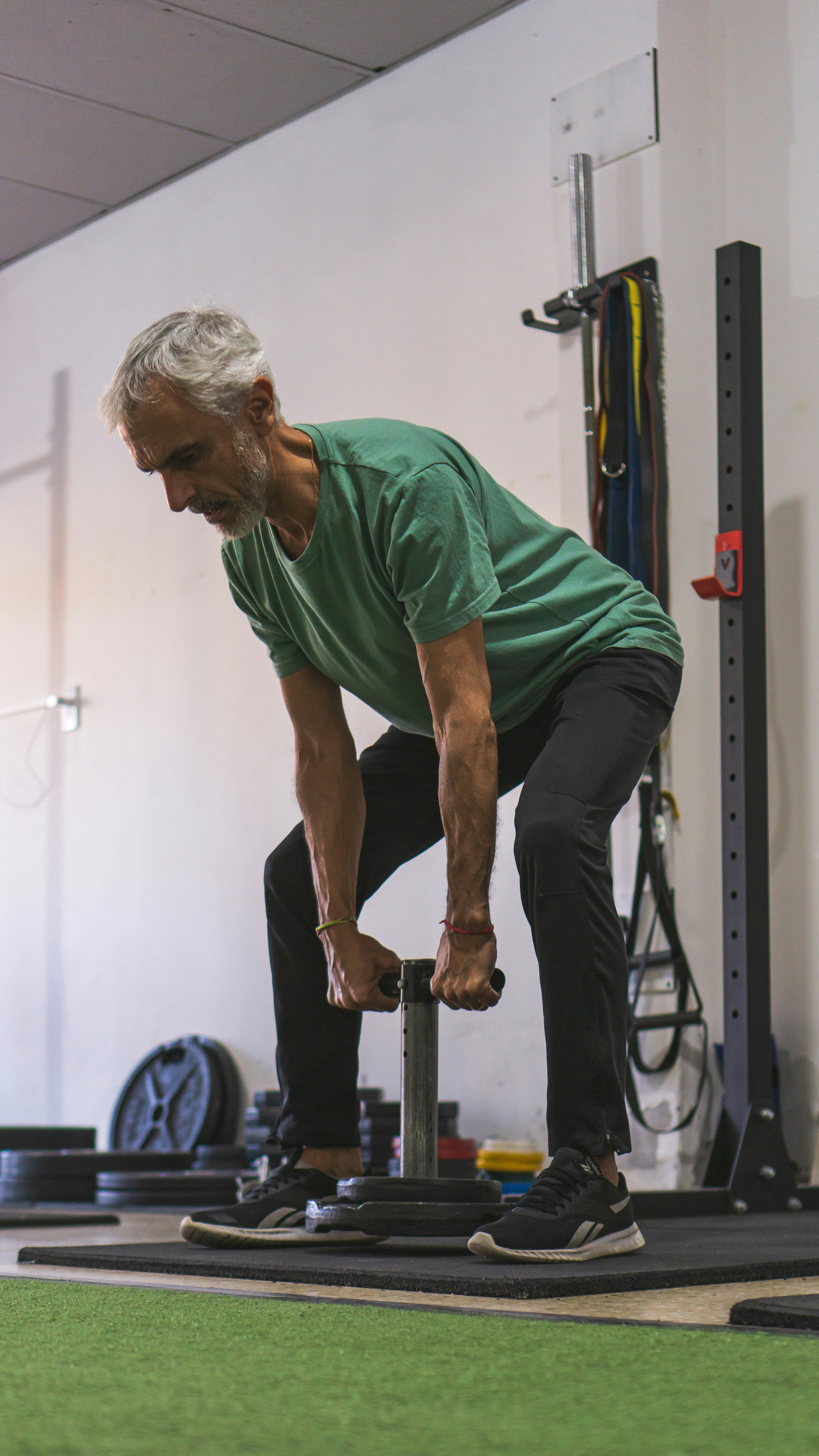
The deadlift is another effective exercise for strengthening the posterior chain, which includes the back, glutes, and hamstrings. Start with your feet hip-width apart and grip the barbell or weights centered over your feet. Keeping your back straight, lower your torso while pushing through your heels to stand upright again. Beginners can perform this movement with lighter weights or even bodyweight to master the technique.
Lunges focus on the hips, quads, and glutes, promoting stability while engaging the core muscles. To execute a lunge, step forward with one leg, lowering the hips until both knees are bent at about a 90-degree angle. Alternating legs allows for balance development and can improve functional movement patterns.
Additionally, incorporating core-strengthening routines, such as planks and bridges, enhances spinal stability. The plank engages numerous core muscles, while the bridge targets the glutes and lower back. Aim for two to three sets of each exercise, performed two to three times a week, allowing adequate recovery between sessions.
Incorporating these strength training exercises into your regular routine can significantly contribute to hip and spine health, promoting longevity and functional mobility throughout the aging process.
Frequently Asked Questions about Strength Training and Aging
As individuals age, they often have numerous questions and concerns about incorporating strength training into their exercise routines. This section seeks to address some of the most common inquiries regarding the practice, particularly in relation to safety, program initiation, frequency of training, and the necessity of professional guidance.
One major concern is whether strength training is safe for older adults. The answer is typically yes, provided that exercises are performed with proper technique and appropriate weights. Engaging in strength training can significantly enhance muscle mass, bone density, and overall mobility while also reducing the risk of falls.
For those contemplating how to start a strength training program, it is advisable to begin slowly, focusing on fundamental movement patterns. Simple exercises using body weight or resistance bands can establish a solid foundation before advancing to heavier weights. Ideally, working with a qualified fitness professional familiar with age-related considerations can provide essential guidance, ensuring exercises are effective and safe.
Another common question pertains to how often one should engage in strength training. Recommendations suggest training two to three times per week, allowing for rest days in between sessions. This practice ensures muscles have adequate time to recover while promoting consistent progress in strength and endurance.
Misconceptions about strength training for older adults often lead to hesitancy. For instance, many believe that lifting weights will lead to joint strain or injury; however, proper strength training can actually enhance joint stability and support healthy aging. It is crucial to remember that prior to starting any new exercise regimen, particularly if you have pre-existing health conditions or concerns, consulting a healthcare provider is strongly recommended.
