
Make the fat disappear to bring out the true you!
Losing body fat during exercise is driven mostly by total calorie burn, workout intensity, consistency, and whether you maintain a calorie deficit overall—not by trying to force a specific “fat-burning zone.” HIIT and other vigorous training can burn a lot of calories in a short time, while strength training helps preserve muscle and can raise daily energy expenditure over time.webmd
How body fat loss works
During exercise, your body always uses a mix of fat and carbohydrates for fuel, and the mix shifts with intensity. Lower-intensity work uses a higher percentage of fat, while harder exercise relies more on carbs because they provide faster energy.precision-hydration+1
That does not mean you must burn mostly fat during the workout to lose body fat. What matters for fat loss is the bigger picture: if you burn more calories than you eat across the day and week, your body draws on stored energy, including body fat.webmd+1
Do carbs need to be present?
Yes, carbohydrates need to be available in the body for intense exercise to be performed well, because they are the fastest fuel source when intensity rises. But carbs do not block fat loss; in fact, adequate carbs can help you train harder, do more total work, and therefore burn more total calories.precisionhydration+1
If you go very hard in a workout, your body depends more on glycogen and blood glucose, and low carbohydrate availability can make it harder to sustain intensity. So the practical answer is: carbs are not required to “turn on” fat loss, but they often help you train better, which can support fat loss over time.webmd+1
Best exercise methods
The most effective exercise methods for body-fat loss are the ones you can repeat consistently while keeping workout quality high. HIIT is efficient for calorie burn and can increase post-exercise calorie use, but it is demanding and not ideal every day.webmd+1
Steady cardio and incline walking are easier to recover from and can help you accumulate a lot of weekly calorie burn. Strength training is also valuable because it helps preserve muscle while dieting, which improves the quality of the weight you lose.houstonmethodist+1
Calorie burn chart
These are rough estimates for a 15-minute session. Actual calories depend on body weight, speed, incline, work-to-rest ratio, fitness level, and how hard you truly push.
| Activity | Expected calories in 15 min | Typical ranking |
|---|---|---|
| HIIT | About 150–250 calories | Highest |
| High-intensity aerobic cardio | About 120–220 calories | Middle to high |
| Incline walking on treadmill | About 75–150 calories | Lowest to middle |
HIIT usually burns the most calories per minute because the effort is highest and the workout demand is greatest. High-intensity steady cardio is usually a bit lower than HIIT but still high, while incline walking is usually lower per minute even though it can still be very effective and easier to sustain.webmd+4
Which burns the most?
For a 15-minute session, HIIT usually burns the most calories, followed by high-intensity aerobic cardio, then incline walking. However, the “best” option depends on what you can recover from and repeat consistently, because total weekly output matters more than one workout.webmd+3
A useful way to think about it: if HIIT leaves you too fatigued to train again tomorrow, incline walking may actually help you burn more calories across the week.
Sample HIIT workout for fat loss beginners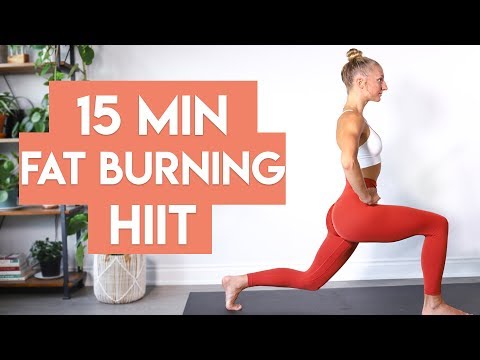
15 min FAT BURNING HIIT (Beginner Friendly No Equipment)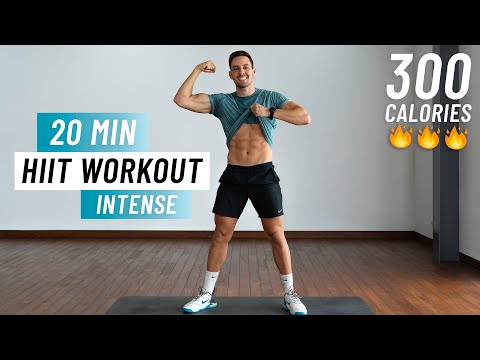
20 Min Fat Burning HIIT Workout – Full body Cardio, No …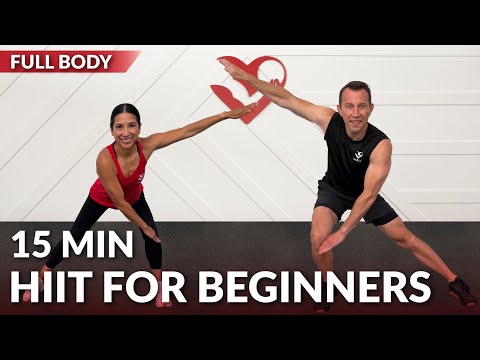
15 Min HIIT Workout for Beginners for Fat Loss – Standing No …
Here’s a simple beginner HIIT workout for fat loss you can use 2–3 times per week. Keep the effort high, but choose moves and rest periods that let you maintain good form.menshealth+1
Beginner HIIT workout
Warm-up: 5 minutes
- March in place.
- Arm circles.
- Bodyweight squats.
- Side steps.
- Light high knees.
Main circuit: 20 seconds work, 40 seconds rest
Do each move for 20 seconds, then rest 40 seconds. Complete 2–4 rounds.
- Bodyweight squats.
- Modified push-ups.
- Reverse lunges.
- Mountain climbers, slow to moderate pace.
- Jumping jacks or step jacks.
- Glute bridges.
Cool-down: 3–5 minutes
- Easy walking.
- Quad stretch.
- Hamstring stretch.
- Chest stretch.
- Deep breathing.
Beginners often do best with a work-to-rest ratio that keeps intensity high without breaking form, such as 20 seconds on and 40 seconds off. That style is also easier to recover from than all-out sprint-style intervals.menshealth+1
How to progress
Start with 2 rounds the first week, then move to 3 rounds when it feels manageable. After that, you can shorten rest a little, add a round, or make the exercise variation harder.menshealth+1
A good rule is to finish the workout feeling challenged, not wrecked. If your breathing or form falls apart, slow down the movement or increase the rest.
Fat-loss tips
HIIT works best when it fits into a larger fat-loss plan that includes a calorie deficit, enough protein, and consistent weekly training. You do not need extreme workouts every day; 2–3 HIIT sessions per week is enough for many beginners.today+1
Walking, strength training, and recovery days can all support fat loss too. That combination is often more sustainable than relying on HIIT alone.
FAQ
What is the best HIIT workout for beginners?
The best beginner HIIT workout uses simple bodyweight exercises, short work intervals, and enough rest to maintain good form. A routine like 20 seconds of work followed by 40 seconds of rest is a good starting point.
How many times a week should a beginner do HIIT for fat loss?
Most beginners do best with 2 to 3 HIIT sessions per week. This gives you enough stimulus for fat loss while still allowing recovery.
Is HIIT better than cardio for losing fat?
HIIT can burn more calories in less time, but steady cardio can be easier to recover from and maintain consistently. The best option is the one you can do regularly while staying in a calorie deficit.
Do I need equipment for beginner HIIT?
No, you do not need equipment. Bodyweight exercises like squats, lunges, push-ups, mountain climbers, and glute bridges are enough to create an effective workout.
Can beginners do HIIT if they are overweight or out of shape?
Yes, but the workout should be scaled to fitness level. Lower-impact moves, longer rest periods, and slower pacing can make HIIT safer and more manageable.
How long should a beginner HIIT workout be?
A beginner HIIT workout can be as short as 10 to 20 minutes, not including warm-up and cool-down. Shorter sessions are often better at first because they are easier to recover from.
Does HIIT help burn belly fat?
HIIT can help reduce body fat overall, including belly fat, but spot reduction is not possible. Fat loss happens throughout the body when you consistently burn more calories than you eat.
Should I do HIIT every day?
No, HIIT every day is usually too much for beginners. Recovery is important, so it is better to alternate HIIT with walking, strength training, or rest days.