
Balance Training for Beginners: A Safe, Practical Path to Better Stability
Balance training is the practice of controlling the body’s position while standing still or moving. It involves more than simply keeping the feet beneath the hips. The eyes provide information about the environment, the inner ear detects head position and motion, and the muscles and joints report how the body is positioned. The nervous system combines these signals and coordinates an appropriate response. Because this system can adapt through practice, balance can improve at almost any age and across a wide range of fitness levels.
For beginners, regular balance exercises can support better coordination, posture, and body awareness. They may also make everyday movement feel more controlled and increase confidence when walking, using stairs, getting out of a chair, or carrying objects. Improved control can help reduce the likelihood of falls during ordinary activities, particularly when the surface changes or attention is divided. These benefits do not require athletic ability, advanced equipment, or challenging poses. A stable chair, wall, or countertop can provide useful support while basic skills develop.
Balance has both static and dynamic forms. Static balance means maintaining control in a relatively still position, such as standing on one leg or holding an upright stance. Dynamic balance involves maintaining stability while stepping, turning, reaching, walking, or changing direction. A well-rounded beginner routine gradually addresses both types, beginning with movements that feel manageable and adding challenge only when control improves.
Progress should be judged by steadier movement, smoother transitions, improved posture, and greater confidence rather than by eliminating every wobble. Small corrections are a normal part of learning and can provide useful feedback. However, balance may be affected by an injury, neurological condition, dizziness, vision problem, or medication. Anyone experiencing these concerns, repeated falls, or unusual unsteadiness should seek appropriate medical advice before starting or progressing an exercise program. Professional guidance can help identify suitable activities and ensure that practice remains safe.
Before beginning balance exercises, prepare an environment that reduces avoidable hazards. Choose a firm, level surface free from rugs, cords, furniture, and other clutter. Adequate lighting is important, particularly if you exercise early in the morning or in the evening. Wear supportive, well-fitting shoes, or work barefoot when the surface is safe and the exercise instructions allow it. Keep a sturdy chair, countertop, wall, or railing within easy reach. Stand close enough to grasp the support without stretching, leaning, or twisting. Using support is a practical safety tool, not a sign of weakness; it allows beginners to practice control while building confidence.
Begin each session with several minutes of gentle movement. Walk slowly around the room or march in place, then add ankle circles or alternating ankle movements, easy knee bends, and relaxed shoulder rolls. These actions warm the muscles and joints without creating fatigue. During exercises, maintain an upright but relaxed posture, with the head aligned over the shoulders and the abdomen gently engaged. Keep the knees soft rather than locked, breathe normally, and move slowly enough to remain in control. Looking at a stable point ahead may help limit unnecessary swaying, although you should not stare down if doing so affects posture.
For most beginners, a 10- to 15-minute session several times per week is a reasonable starting point. Rest whenever your muscles become tired, and increase duration or difficulty gradually rather than forcing progress. Stop immediately if you experience sharp pain, chest discomfort, unusual shortness of breath, severe dizziness, blurred vision, or a sudden loss of coordination. Sit or hold a stable support until you feel steady. Anyone with a recent injury, significant joint or neurological condition, frequent falls, unexplained dizziness, or concerns about exercise safety should consult a healthcare professional or physical therapist before starting. Professional guidance can help identify suitable movements and determine whether additional support or supervision is needed.
Begin beside a sturdy counter, heavy chair, or wall, keeping the support within easy reach. Stand upright with feet about hip-width apart, knees relaxed, and eyes facing forward. Start with side-to-side weight shifts: slowly move your weight toward the right foot, return to center, then shift toward the left. Next, shift gently forward toward the balls of the feet and backward toward the heels without lifting the feet. These movements develop body awareness and teach controlled use of the ankles and hips. Keep the range small, breathe normally, and avoid leaning from the waist.
Progress to a narrow stance or supported heel-to-toe position, placing one foot directly in front of the other only as far as feels secure. Hold the counter with both hands at first, then one hand, and eventually use only a fingertip if stability allows. Keep the feet pointing forward and avoid locking the knees. A wider stance is an appropriate modification. When this feels steady, practice single-leg standing with one or both hands lightly touching the support. Lift one foot only slightly, hold for a few controlled seconds, and change sides. Short, consistent holds are more valuable than forcing a longer duration.
Add heel raises by lifting both heels slowly and lowering them with control, followed by toe raises that lift the front of the feet while the heels remain down. These exercises strengthen the calves and muscles around the shins, supporting ankle control. Use both hands for assistance or reduce the height of each lift if needed. Then practice supported marching, alternately lifting each knee a few inches. Keep your trunk upright and place each foot quietly.
Once these exercises feel stable, try walking along a clear path with heel-to-toe steps, then add side steps. Backward steps should be introduced last, with a nearby support and no obstacles. Move smoothly, maintain controlled breathing, and stop before fatigue affects posture or foot placement. Stability improves through regular, careful practice rather than speed or discomfort.
Progressing balance exercises safely means changing only one difficulty factor at a time. Once a movement feels controlled, begin by using less hand support, such as resting fingertips on a counter instead of gripping it. You can then hold the position for a few additional seconds or complete one or two more repetitions. Other manageable progressions include narrowing the stance slightly, practicing on both sides, adding gentle head turns, or introducing controlled reaching and stepping patterns. Move slowly, maintain good posture, and return to an easier version if your stability declines.
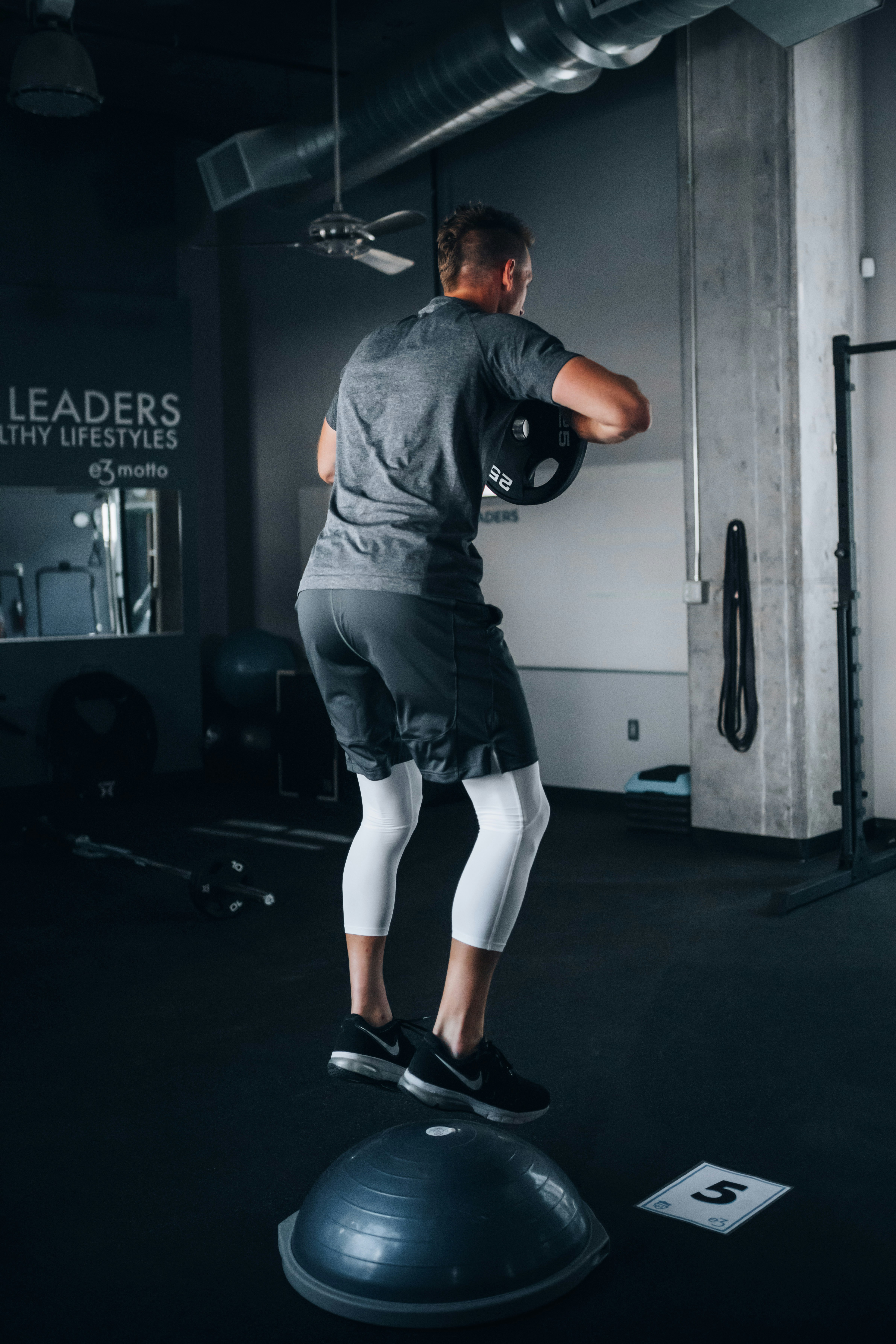
Closing the eyes or standing on an unstable surface creates a substantial increase in difficulty and should not be attempted casually. These variations reduce visual or predictable support and may lead to a fall, particularly for beginners. Use them only with appropriate supervision, a secure setup, and a clear area free from obstacles. A sturdy counter, rail, or another reliable support should remain nearby, and a trusted person or qualified professional can help determine when such challenges are suitable.
Track progress with simple notes after each session. Record how long you held a position, how much support you used, your steadiness, perceived effort, and confidence. This information can reveal gradual improvement even when changes are not immediately noticeable. Aim for consistency rather than intensity by practicing several times per week, while allowing recovery between more challenging sessions.
Balance can also become part of everyday routines. Stand beside a counter while brushing your teeth, practice controlled weight shifts during kitchen tasks, take deliberate steps when turning, and use stairs mindfully by placing each foot securely. Continue strength and mobility exercises alongside balance work, since flexible joints and stronger muscles support better control. Keep floors, walkways, and lighting fall-safe, and celebrate small improvements. If progress remains limited, or if dizziness, pain, numbness, unusual weakness, or repeated loss of balance appears, seek guidance from a healthcare professional or physical therapist.
