
The Biggest Strength Training Mistakes People Over 50 Make (And How to Fix Them)
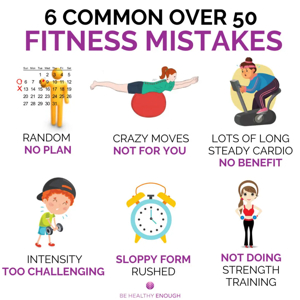


The good news: most of the common mistakes people over 50 make in the weight room are easy to fix. With a few simple adjustments, you can get more results from your workouts while dramatically lowering your risk of injury.
Mistake #1: Trying to Train Like You Did in Your 20s
One of the biggest mistakes people over 50 make is trying to jump back into the same style of training they used in their teens, 20s, or 30s—heavy weights, fast lifting, little warm-up, and minimal recovery. Your joints, tendons, and recovery capacity simply do not respond the same way now, especially if you have been inactive or are managing old injuries.
This often shows up as skipping warm-ups, loading too much weight too quickly, or pushing through nagging pain just to hit a certain number on the bar. That combination is a setup for rotator cuff tears, low back strains, and knee flare-ups.
How to fix it
- >Think in terms of
training age
- , not calendar age—if you have not trained in years, treat yourself like a true beginner.
>Use your first 5–10 minutes for warm-up: marching in place, light band work, and easy practice sets.
>Start with loads that feel “too easy” and build up over several weeks instead of forcing your old numbers on day one.
Mistake #2: Avoiding Strength Training or Only Doing Cardio
Another common pattern after 50 is doing a lot of walking or moderate cardio but little to no strength work. While walking is great for your heart and mood, it does very little to prevent age-related muscle and bone loss by itself.
Without resistance training, you gradually lose the muscle power you need to get off the floor, climb stairs, or catch yourself if you trip. Over time, that makes you more vulnerable to falls, fractures, and loss of independence.
How to fix it
- >Make strength training a
priority
- at least two, ideally three, days per week, even if the sessions are short.
>Keep your cardio, but let it support your strength work rather than replace it—walk on most days and lift on two to three non-consecutive days.
>Focus on big movements that train multiple joints at once: squats or sit-to-stands, rows, presses, and hip hinges.

Mistake #3: Lifting Too Heavy, Too Soon
Lifting weights that are far too heavy for your current strength is a fast way to irritate your shoulders, back, hips, and knees—especially with overhead pressing, machine leg extensions, and explosive lifts. Many people over 50 assume that “heavy or nothing” is required to see results, then end up sidelined with injuries.
The reality: you can build excellent strength using moderate loads, controlled tempo, and stopping each set with one to two good reps still in reserve.
How to fix it
- >Pick a weight you can lift for about 8–12 controlled reps, where the last two feel challenging but you’re not straining or losing form.
>Slow down your lowering phase (three to four seconds down) to increase muscle stimulus without piling on weight.
>Avoid risky high-load moves if you have joint issues—such as deep leg extensions, behind-the-neck pulldowns, or heavy overhead presses—and use safer alternatives.
Mistake #4: Moving Too Fast and Letting Form Break Down
Rushing through reps is another classic mistake. Fast, sloppy repetitions shift stress away from the muscles and onto your joints and connective tissues, which are less forgiving with age. This is particularly risky for the shoulders, lower back, and knees.
Poor form often shows up as bouncing at the bottom of a squat, jerking weights with momentum, or arching the lower back during presses and rows.
How to fix it
- >Use a controlled tempo: two to three seconds to lift, three to four seconds to lower.
>Only work through a range of motion that you can control without pain or losing posture.
>Film your lifts or ask a qualified coach or physical therapist to check your form, especially for squats, deadlifts, and pressing movements.
Mistake #5: Skipping Warm-Ups and Mobility Work
Many people over 50 walk into the gym cold and go straight to the machines or weights. Tight hips, stiff shoulders, and an unprepared spine make it much easier to strain something when you start loading your body.
Neglecting mobility also makes it harder to maintain good technique as you progress, which can limit your long-term gains.
How to fix it
- >Dedicate 5–10 minutes at the start of each session to dynamic warm-up: marching in place, hip circles, arm swings, and light band work.
>Include basic mobility for the hips, upper back, and shoulders—areas that tend to stiffen with age.
>Use your first set of each exercise as a lighter “ramp-up set” before moving to your working weight.
Mistake #6: Not Allowing Enough Recovery
Older lifters often underestimate how much recovery they need between demanding sessions. Training hard on back-to-back days or layering intense cardio on top of heavy strength work can quickly lead to fatigue, nagging pain, and stalled progress.
Muscles and connective tissues generally take longer to bounce back after 50, especially if sleep and nutrition are not dialed in.
How to fix it
- >Leave at least one full day between heavy strength sessions for the same muscle groups.
>Use non-training days for light movement like walking, stretching, or easy cycling—not more intense workouts.
>Prioritize sleep, hydration, and sufficient protein to support muscle repair.
Mistake #7: Having No Plan (Or Changing Plans Every Week)
Lastly, many people over 50 go to the gym without a clear plan—or they change routines so often that their body never has time to adapt. Random workouts make it very hard to track progress or know whether your program is actually working.
Without structure, you are more likely to repeat the same safe but limited exercises and neglect key areas like balance, core strength, and pulling movements for the back.
How to fix it
- >Follow a simple full-body or upper/lower strength plan for at least four to six weeks before making major changes.
>Track your exercises, sets, reps, and weights in a notebook or app so you can see progress over time.
>Make sure your week includes strength, low-impact cardio, mobility, and some balance or core work.

FAQs: Strength Training After 50
Is strength training safe after 50?
For most healthy adults, yes—and major health organizations encourage older adults to do strength work at least two days per week. The key is to use appropriate loads, good form, and enough recovery. Always check with your doctor if you have significant medical issues or joint problems.
How many days per week should I lift?
Most people over 50 do well with two to three non-consecutive strength days per week. If you are brand new or returning after a long break, start with two days and build from there as your recovery improves.
Should I avoid heavy weights altogether?
You do not have to avoid heavy weights forever, but you should earn them. Start with moderate loads you can control for 8–12 reps with solid form, then increase gradually. If you have arthritis or past injuries, safer, joint-friendly variations may always be the better choice.
What exercises should people over 50 be careful with?
Deep leg extensions, heavy overhead presses, behind-the-neck pull-downs, high-impact plyometrics, and aggressive back extension machines can be problematic for many adults over 50—especially with existing joint issues. Replacing them with chair squats, wall push-ups, front pull-downs, hip hinges, and controlled step-ups is often much safer.
How do I know if my workout was “hard enough”?
A good rule of thumb is to finish each set feeling like you could do one or two more quality reps, but no more. If you could easily keep going, your weight or reps may be too low; if your form breaks down or you are straining, it is probably too much.
Image Source Links for Copying
- >