
How Often Should You Lift After 50?
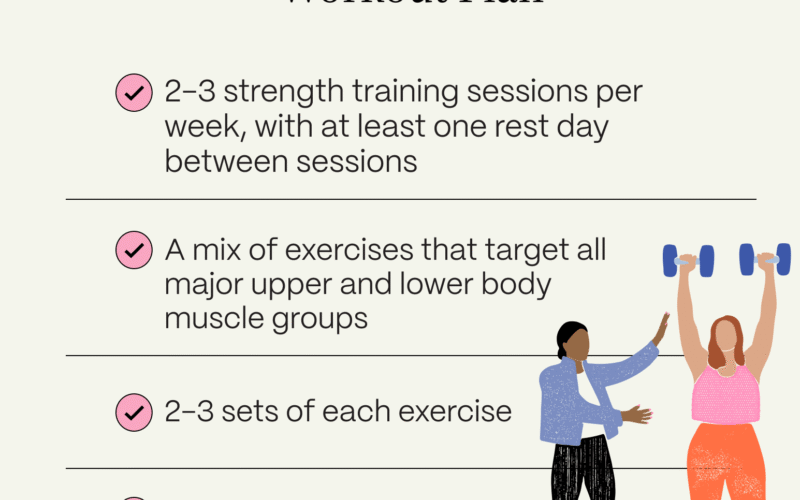

Research on older adults consistently shows that 2–3 strength sessions per week is the sweet spot for improving strength, muscle mass, and function. Training the same muscles again roughly every 48–72 hours takes advantage of the body’s recovery and adaptation window.
- Minimum effective dose: 2 full‑body sessions per week.
- Optimal for most: 2–3 full‑body or upper/lower sessions per week.
- Advanced lifters: Up to 4 shorter sessions per week, as long as total weekly volume stays similar and joints tolerate it.
The key is consistency across months and years rather than cramming more sessions into a single week.
What the Guidelines and Studies Actually Say
Several major organizations and research reviews converge around similar recommendations.
- General health guidelines (e.g., major clinics and public health agencies) advise strength training all major muscle groups at least two days per week.
- A review of training frequency in older adults found that 2 nonconsecutive strength sessions per week can be as effective as 3 for building strength in people over 50, especially in the first few months of training.
- Evidence‑based resistance training guidelines for older adults suggest 2–3 workouts per week with 1–2 multi‑joint exercises per major muscle group, 2–3 sets of 6–12 reps at about 70–85% of one‑rep max.
There is even research indicating that once‑weekly, to‑fatigue training can improve strength in older adults, but twice weekly is generally more productive and sustainable for long‑term gains.
How to Structure Your Weekly Training
You can organize 2–3 weekly sessions in different ways depending on your schedule and recovery.
- Two‑day full‑body plan (e.g., Monday & Thursday): Hit legs, push, pull, and core each day with moderate volume.
- Three‑day full‑body plan (e.g., Monday, Wednesday, Friday): Slightly lower volume per session, but more frequent stimulation for muscle and strength gains.
- Three‑ to four‑day split plan (e.g., upper/lower): Useful for more experienced lifters who want shorter sessions but slightly higher weekly volume.
Most experts recommend avoiding heavy strength work for the same muscle group on back‑to‑back days and leaving at least 24–48 hours before you train that area hard again.
Intensity, Volume, and Recovery After 50
Frequency only works if intensity, volume, and recovery are dialed in.
- Intensity: Older adults can safely work with moderate to relatively heavy loads (around 70–85% of one‑rep max), using 6–12 reps per set, as long as technique is solid.
- Volume: Evidence‑based guidelines suggest 2–3 sets per exercise, with 6–12 total exercises per workout covering all major muscle groups.
- Recovery: Physiological adaptations from strength training typically require 48–72 hours to occur, which is why spacing sessions 2–3 days apart is effective.
Some newer research even supports carefully programmed heavy lifting and occasional one‑rep‑max testing in older adults, provided it is supervised and progresses gradually. Still, joint‑friendly exercises, avoiding pain, and prioritizing recovery remain the top priorities after 50.
Balancing Weights with Cardio and Activity
Lifting frequency should sit inside a broader weekly activity plan.
- Public health guidelines recommend at least 150 minutes of moderate or 75 minutes of vigorous aerobic activity per week, plus strengthening activities at least 2 days per week.
- A practical plan for many over‑50 adults is 2–3 strength sessions plus 2–3 days of low‑impact cardio (walking, cycling, swimming) and some balance/flexibility work.
Doing “something” daily—walking, mobility, light activity—while reserving 2–3 days for focused strength training works very well for long‑term adherence and joint health.
FAQ: Weight Training Frequency After 50
Is lifting weights 3 times a week too much after 50?
For most healthy adults over 50, 3 well‑planned sessions per week is safe and effective, especially if you avoid training the same muscle group hard on consecutive days and manage volume.
Can I build muscle lifting only twice per week?
Yes. Research in older adults shows that 2 nonconsecutive strength sessions per week can produce muscle and strength gains comparable to more frequent training, especially in the first months.
How many rest days do I need between lifting sessions?
Aim for 48 hours between hard sessions for the same muscle group. Many older adults do well with a “lift, light movement, lift” rhythm across the week.
Should older adults lift heavy or light?
Both can work. Studies show that heavier loads build strength efficiently, while lighter loads in a higher rep range can still build muscle if sets are taken close to fatigue. Choose loads that challenge you without aggravating joints.
How long should my strength workouts last?
You can get meaningful results with 20–30 minutes of strength training 2–3 times per week if you focus on multi‑joint movements and work near fatigue for each set.
Is once‑a‑week lifting enough?
Once‑weekly, to‑fatigue training can improve strength in older adults, particularly beginners. However, 2 sessions per week are generally more effective and are the evidence‑based minimum for most people over 50.
How do joint issues or arthritis affect frequency?
People with joint pain or arthritis often do better with 2–3 shorter, lower‑impact sessions per week, using joint‑friendly exercises, controlled tempo, and careful load progression. Consulting a clinician or experienced coach is wise if you have significant pain or past injuries.