

The Hidden Dangers of Sedentary Behavior: Understanding Stiffness and Embracing Movement

Understanding the Impact of Prolonged Sitting on the Body
Sedentary behavior, particularly the act of sitting for extended periods, has profound physiological effects on the human body. As individuals spend increasingly long hours in sedentary positions, muscle stiffness often becomes a prevalent issue. Prolonged sitting contributes to the weakening and atrophy of muscles, particularly in the lower body, where the hip flexors and glutes may become underutilized. This inactivity can lead to an overall decrease in muscle mass and strength over time.
One of the more concerning repercussions of excessive sitting is reduced flexibility. The maintenance of flexibility is crucial for optimal movement and functionality. When muscles are not engaged, they can so easily shorten, causing tension in various regions of the body and leading to stiffness. This stiffness can significantly impair a person’s ability to perform daily activities effectively and can contribute to a cycle of inactivity and discomfort.
Poor circulation is another adverse effect linked to prolonged sitting. While seated, blood flow can become restricted, particularly to the legs, which may increase the risk of developing venous issues or thrombosis over time. This lack of movement hampers the body’s natural processes of nutrient delivery and waste removal, ultimately affecting overall health and well-being. The long-term consequences of a sedentary lifestyle manifest as increased risks for various health conditions, including cardiovascular disease, obesity, and musculoskeletal disorders.
The implications of prolonged sitting are far-reaching, underscoring the essential nature of regular movement throughout the day. By understanding these physiological effects, individuals can become more aware of their habits and may strive to incorporate more movement into their daily routines, thus mitigating the risks associated with sedentary behavior.
Identifying the Signs of Stiffness from Sitting
Prolonged periods of sitting can lead to various physical issues, one of the most common being stiffness. Understanding the signs and symptoms of stiffness is essential for maintaining mobility and overall health. One of the first areas to notice discomfort is often the hips. When sitting for long durations, the hip flexors can shorten, leading to reduced flexibility and a feeling of tightness.
Another frequently affected area is the back, particularly the lower back. Discomfort or stiffness in this region can manifest as a dull ache or a sensation of rigidity following extended sitting. This is often due to the lack of movement, which causes the muscles and joints to become less pliable. Additionally, the neck is another area that may exhibit stiffness. Hunching over computers or phones can lead to tension and restricted movement, commonly referred to as “tech neck.”
Recognizing when your body is feeling stiff can involve paying attention to a few key indicators. These can include a decrease in range of motion, increased difficulty in transitioning from sitting to standing, and a general feeling of discomfort when moving. Furthermore, you may notice that simple tasks, such as bending down or reaching overhead, become more challenging as stiffness sets in.
Self-assessment techniques can be helpful in gauging your levels of stiffness. One common method is to perform gentle stretches to see if any particular area feels tight. Moreover, try standing up and walking around periodically, and notice if this alleviates any discomfort. By actively engaging in movements and checking in with how your body responds, you can better identify stiffness and take proactive steps to mitigate its effects.
Strategies to Incorporate More Movement into Your Day
In today’s increasingly sedentary lifestyle, it is crucial to find ways to intersperse movement throughout the day. One effective strategy is to schedule regular short movement breaks during work hours. For example, setting a timer to remind oneself to stand up and stretch every hour can significantly reduce prolonged periods of sitting. This could involve simple stretches, walking around the office, or even engaging in brief exercises such as squats or calf raises. These short bursts of activity can help counteract the stiffness associated with sedentary behavior.
Another practical approach is to consider active commuting. This involves incorporating physical activity into the daily routine by walking or cycling to work instead of driving or taking public transportation. For those who live too far away to walk or bike, consider parking farther from the office or getting off public transportation a stop or two early to allow for some extra steps. This not only enhances mobility but also contributes to overall physical health.
Additionally, creating a routine that encourages movement throughout the day is essential. This may involve establishing specific times during the day designated for exercise, such as a 20-minute walk during lunch or participating in a fitness class after work. Engaging with colleagues through group challenges, like a daily step count competition, can also motivate individuals to increase their activity levels. Furthermore, utilizing technology, such as fitness trackers or smartphone apps, to set daily movement goals can promote accountability and help individuals stay on track.
In conclusion, integrating movement into daily life does not require extensive planning. By implementing these strategies, it is possible to significantly reduce sedentary behavior and improve overall mobility and health.
Simple Exercises to Combat Stiffness and Enhance Flexibility
Sedentary behavior often leads to stiffness, particularly in key muscle groups that support posture and mobility. To address this, incorporating specific exercises into a daily routine can significantly enhance flexibility and reduce discomfort. Below are a variety of exercises that target the neck, shoulders, back, hips, and legs, designed to counteract the effects of prolonged sitting.
Neck Stretch: Begin by sitting or standing tall. Gently tilt your head towards one shoulder, using your hand to apply light pressure for a deeper stretch. Hold for 15-30 seconds and switch sides. This simple stretch helps alleviate tension built up in the neck from looking down at screens.
Shoulder Rolls: While standing or sitting, lift your shoulders towards your ears, then roll them back and down, creating a circular motion. Repeat this 10 times, then switch to rolling forward. Shoulder rolls can relieve tightness in the shoulder region, promoting circulation and flexibility.
Seated Torso Twist: While sitting, place your right hand on the back of your chair and twist your torso to the right, keeping your hips facing forward. Hold for 15-30 seconds before switching to the left side. This exercise enhances the mobility of the spine.
Hip Flexor Stretch: Stand with one foot forward and the other foot extended back behind you. Gently lower your hips into a lunge, keeping the front knee over the ankle. Hold this position for 15-30 seconds on each side. This stretch targets the hip flexors, which can become tight from long periods of sitting.
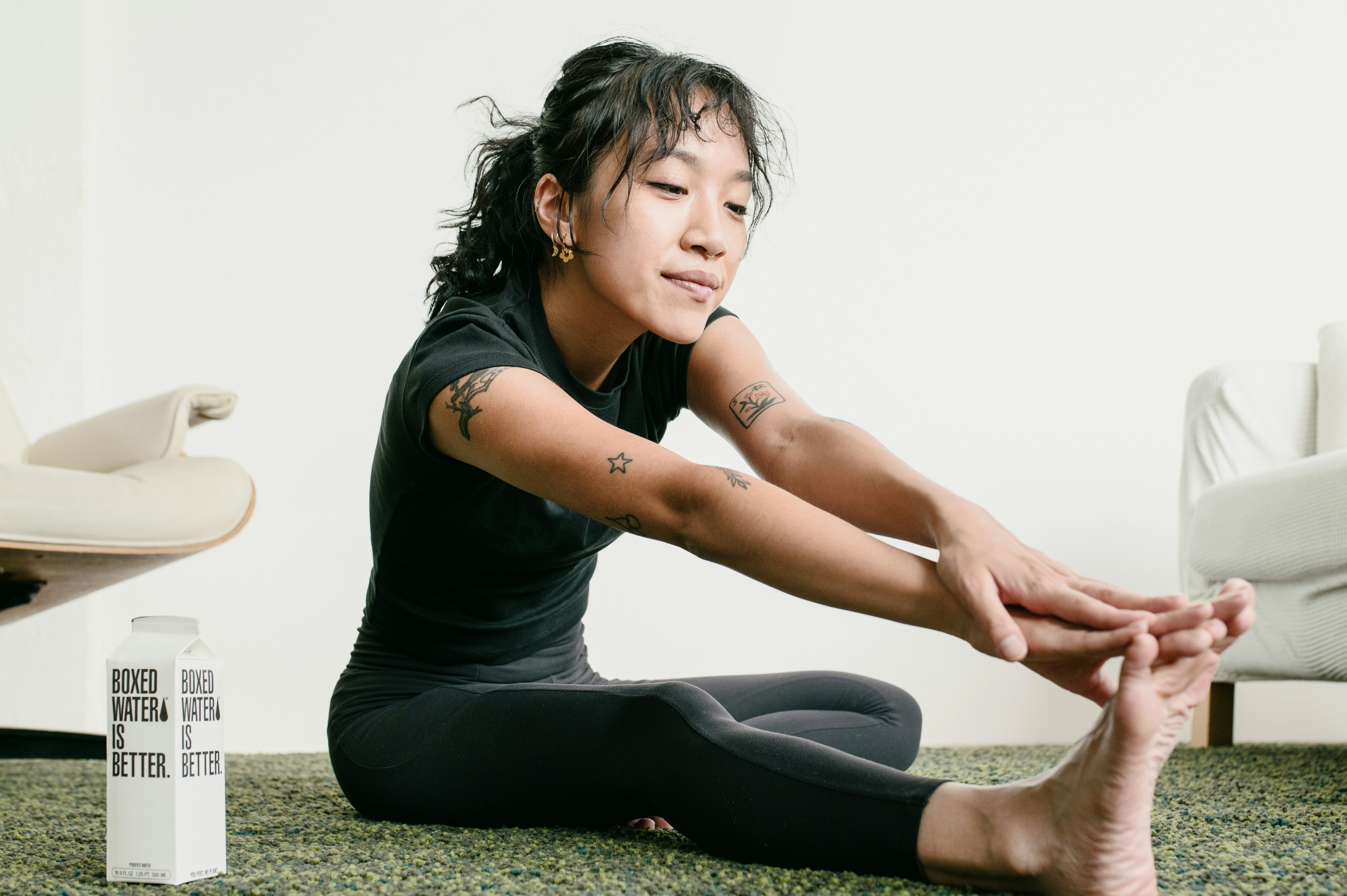
Hamstring Stretch: While seated or standing, extend one leg straight out with the heel on the ground. Reach towards the toes of the extended leg, keeping the back straight. Hold for 15-30 seconds and repeat on the other side. This exercise is beneficial for improving flexibility in the hamstrings.
Incorporating these exercises into your routine does not require a gym; they can be performed at home or even at your workplace. Start slowly, aiming for a few repetitions of each exercise a few times per week, and gradually increase as flexibility improves. Adding movement to your daily life is an essential step in combatting stiffness and enhancing overall wellbeing.
